|
|||||||||||||||||||||
In many respects, we are making progress in our relationship with the animals in our lives. Animal rights are taken increasingly seriously and there is a growing recognition of the profound benefits of the companionship of pets, particularly cats and dogs. Paradoxically, just as we are realizing the justice and the benefits of welcoming and respecting companion animals in our society, there are powerful forces working to marginalize and sequester dogs. Dog owners are denied access to accommodations, public spaces, and transportation. Breed-specific legislation and insurance exclusions fly in the face of our ideals of fair play and the presumption of innocence.
In effect, it has become politically acceptable to treat dogs as vermin. Phobias are legitimized and reinforced. Worse, by denying dogs the opportunity to become socialized with other dogs and with strangers, we are breeding apprehensive, aggressively territorial, neurotic, yappy, snippy, sociopathic, and dangerous animals that reinforce prejudices and litigious tendencies.
In recent years, hundreds of small groups have been organized to establish off-leash areas, to resist breed-specific legislation, and (very recently) to see that pets are handled equitably in emergency evacuations. Larger groups have been fighting for years to prevent cruelty to animals. Unfortunately, there has been no large-scale umbrella organization to fight for the interests of dog owners. Dog Friends has been organized to fill that need.
The concept of "dog-friendliness" presents a uniquely versatile and persuasive focus for dog-owner advocacy. Grounded in commerce (as in "dog-friendly hotel"), the concept implicitly identifies dog owners as a significant economic force. Necessarily vague, the concept is flexible enough to encompass a broad and diverse agenda.
Warm and fuzzy, it offers an unthreatening counterbalance to the forces of intolerance.
Dog friendly communities span the spectrum from existing neighborhoods with a mix of owner occupied and rental units to planned communities which specifically cater to dogs and their owners. Dog friendly housing can be created through the renovation of existing spaces or by the construction of new ones. Dog friendly housing must, of course, be built with both humans and their canine companions in mind. Design elements and materials that are durable, easily maintained and aesthetically pleasing are crucial to the comfort and well being of all occupants. Design solutions that counter dog related problems, such as noise, odors, destructive or dangerous behavior, are also essential in dog friendly housing.
Design considerations are critical in the development of all housing, but are perhaps most important in rental housing where pet owners are often turned away or forced out of housing. One of the primary reasons that dog ownership is either avoided or terminated is that people are unprepared to deal with many of the issues encountered in dog ownership. Some of the reasons relate directly to the environment in which the dog is housed. Dogs can be noisy, create odors and be destructive or dangerous if not properly housed and cared for. Dogs are often excluded from rental properties for these reasons alone. Many dogs are relinquished or re-homed for destructive or nuisance behaviors that might have been prevented through careful and appropriate planning.
Homeowners, landlords, tenants, design professionals and building contractors can create home environments that alleviate dog related problems. Simple design solutions can help prevent behaviors and, in turn, improve community relations. Solutions include proper sound insulation, barriers such as gates, doors and window treatments or solid fences and the use of durable and easily maintained materials.
While conducting research for a book about creating dog-friendly homes it became clear that there is very little scientific research on how dogs behave in human environments, although research data exists pertaining to dogs that are kenneled in laboratories and animal shelters. I discovered differing points of view on how to deal with behavior issues such as barking, aggression and destructive behaviors. Clearly, rigorous research needs to be conducted on dog responses to the built environment in order to help create the best design solutions for behavior problems.
What design strategies and modifications can help facilitate more dog friendly housing? Can these design strategies and modifications be used in rental units, owner occupied housing and commercial establishments such as hotels, restaurants and retail spaces?
submitted by:
Prof. Nancy Chwiecko
While most efforts to cure the problem of homeless pets -- both dogs and cats -- focus on reducing the supply of new pets (through neutering programs) and the supply of homeless pets (through rehabilitation, fostering, and euthanasia), pet-friendliness could reduce the incidence of abandoned pets by stabilizing the demand. A great number of pets are abandoned simply because the owners find they have miscalculated their ability to care for them. They have to move, and find no pet-friendly apartments. They get pregnant, and are persuaded the pet will be a danger to the infant. They need to travel or are otherwise engaged for a brief time, and have no one to take care of their pet. They get a pet for their children, and find that the entire responsibility reverts to them.
Remove the stress, and more people will find ways to keep their cherished companions.
We believe that breed-specific laws and exclusions (from insurance, for instance) are unfair in the same sense that racial profiling and ethnic stereotyping is unfair. Whatever the actuarial evidence, there should be a presumption of innocence in the absence of proof of guilt. The way to mitigate the hazard of dangerous dogs is to make it very costly to own one, and the way to do that is to attach a high monetary value to pets. (How about $10,000 as a baseline, with more for special cases?)
We would assume that most dogs that are involved in attacks on humans have a history of attacks on other dogs and on cats. If such attacks were severely penalized (and their owners compensated for pain and suffering as they deserve to be), there would be strong motivation for the owners of dangerous dogs to control them effectively or get rid of them. Additional motivation could be provided by prosecuting the owners of repeat-offender dogs for criminal negligence.
An ordinance placing a high monetary value on companion animals would undoubtedly be opposed by veterinarians and others who contend that it would raise the cost of malpractice insurance consequently of veterinary care. To them we ought to say, "Too bad!" Why should a few negligent and incompetent veterinarians be exempted from repercussions for the damage they cause? Just as in every other aspect of our life, the option to litigate is the only thing that ensures consumer rights -- and just about every other kind of freedom.
Dog-Friendly Housing: creating a design protocol
Associate Professor
Interior Design, School of Design
Rochester Institute of Technology
Rochester, NY 14623
Dog-Friendliness would reduce pet homelessness
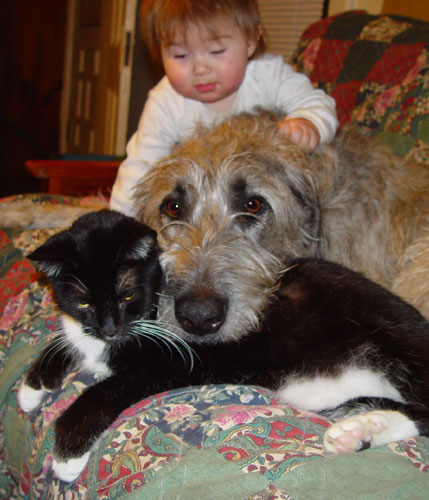
In every instance, a more pet-friendly environment could deter abandonment. More education about pet-ownership. Pet-daycare networks. More pet-friendly rentals. What's needed is not just tolerance, but co-operation. Positive reinforcement. People who like people who share their love of pets.
Fair Value Ordinance???