Welcome to The Weave
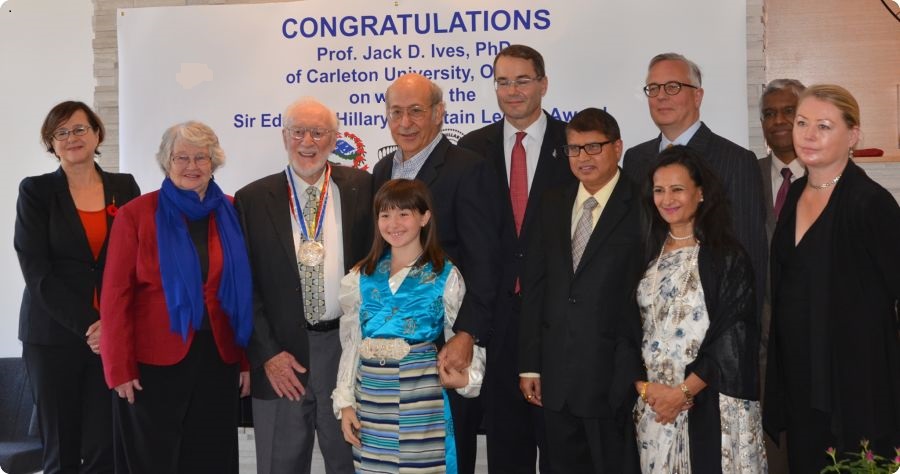
My name is Seth Sicroff, and I have been working on Himalayan tourism and development issues since 1991. My advisor at UC Davis and mentor for many years afterwards was Dr. Jack D. Ives, professor of geography and founding father of the discipline of montology; under Jack I complete a thesis entitled “Approaching the Jade Dragon: Tourism in Lijiang County, Yunnan Province, China” (1998).

In 1999 my wife Empar and I set up an educational tourism operation called “Bridges: Projects in Rational Tourism Development,” which brought small groups of international students to the Khumbu and Rolwaling to study development and implement their own projects in collaboration with local stakeholders. One project that grew out of that program was Sunrise Pashmina. We also met with Kumar Prasad Mainali and Arjun Adhikari (both now Drs. and residing in the USA), and undertook to collaborate with them on their journal Himalayan Journal of Sciences.
In 2002 Prof. Dr. Teiji Watanabe (Geography, Hokkaido, Japan), Kumar, Arjun, Empar and I organized the Namche Conference: People, Parks, and Mountain Tourism in Sagarmatha National Park at the gateway to Mount Everest, in conjunction which we established Mountain Legacy International, which administers the Sir Edmund Hillary Mountain Legacy Medal. I am currently involved in setting up Sister Cities linkages among municipalities in mountainous regions and/or communities with important institutions engaged in montological endeavors.
I have served for many years as the Nepal Editor of Wandering Educators, a travel blog run by indefatigable and seriously brilliant Dr. Jessie Voigts. (I will be sending her several articles on my recent excursions to Nepal, including the one this February along with my daughter Liana Sicroff, who is currently beginning studies at Cornell’s Veterinary School. )
I set up this blog to air my views on mountain stewardship and provoke discourse among those interested in tourism, pashmina, and any aspect of mountain culture. Please engage!
WORK IN PROGRESS: The following is the abstract for a paper to be presented at an upcoming conference. Details soon.
ABSTRACT: Effective stewardship of Nepal’s remote mountain ecosystems is unsustainable without economic opportunity for local communities. Historically marginalized, these hinterlands have relied on tourism to jump-start development. Due to its protean nature, the tourism sector has been able to adapt dynamically to evolving conditions at destinations as well as the core gateways.
Moreover, the mountain tourism sector, working synergistically with the cultural amenities of the core areas, has largely driven the economic development in the nation as a whole. However, the “leave no trace” ethos has not been robust enough to protect Nepal’s natural and cultural legacy. In addition, the sector is vulnerable to natural disasters, political instability, global competition and trends. And looming close at hand is the spectre of anti-tourism, fueled by congestion and other quality-of-life issues.
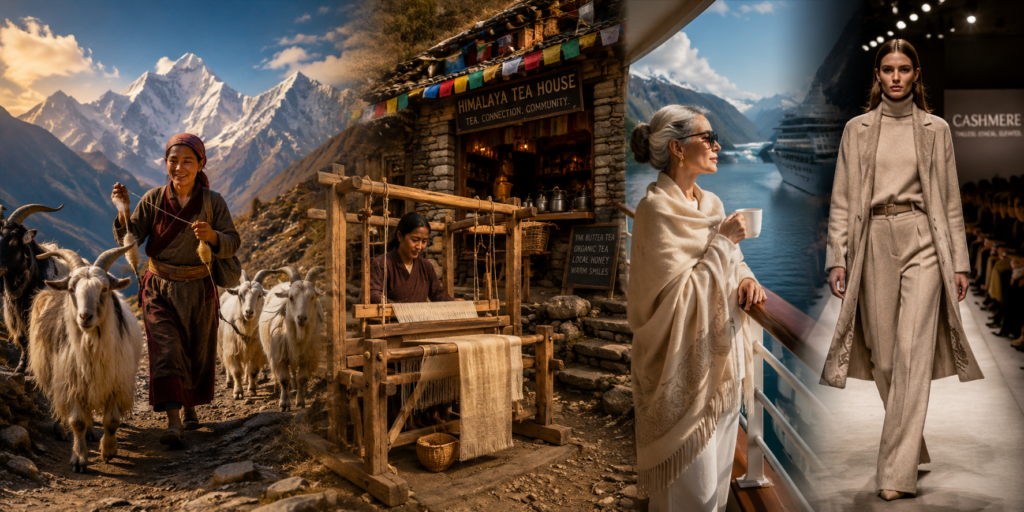
To secure long-term sustainability, Nepal must diversify. Exports currently represent only 0.8% of GDP (PPP). The pashmina (cashmere) sector is a strategic priority, with national targets of $75m by 2026. However, growth is hampered by critical structural impediments. Nepal’s producers rely heavily on imported Chinese yarn, leaving the supply chain vulnerable to fraud and lacking domestic quality control. This is compounded by a retail market dominated by low-quality, high-volume demand from regional tourists and widespread disinformation regarding pashmina’s technical properties, which erodes consumer confidence. Furthermore, while the product’s high value-to-weight ratio makes it an ideal export, the “haggling culture” and the prevalence of sophisticated imitations deter cautious international buyers.
Based on interviews with sector participants, stakeholders and experts, as well as 26 years’ personal experience, this paper analyzes the current bottlenecks and proposes specific accelerants: enforcing the “Chyangra Pashmina” collective trademark to combat counterfeits, investing in domestic de-hairing and spinning to break import dependence, and pivoting toward the global “slow fashion” market. By shifting from high-volume, low-trust tourism sales to a transparent, value-added export model, Nepal can align ecological stewardship with a resilient economic framework for its mountain communities.
Other Articles

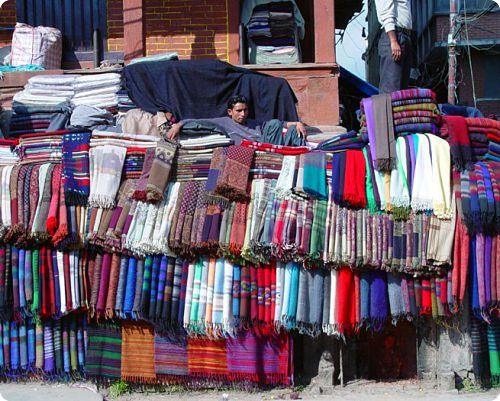
Shopping for Pashmina in Kathmandu: A Complete Guide
by Seth Sicroff
World-famous for adventure travel and cultural voyeurism, Nepal is also a fabulous shopping destination.

Why the Gesar Pashmina Travel Shawl is the Perfect Luxury Gift
by Dr. Jessie Voigts
January 29, 2021
It’s a cold, damp, rainy day. You’re chilled to the bone, and nothing seems to warm you up – not coffee or tea, or cocoa or toasty wool socks.


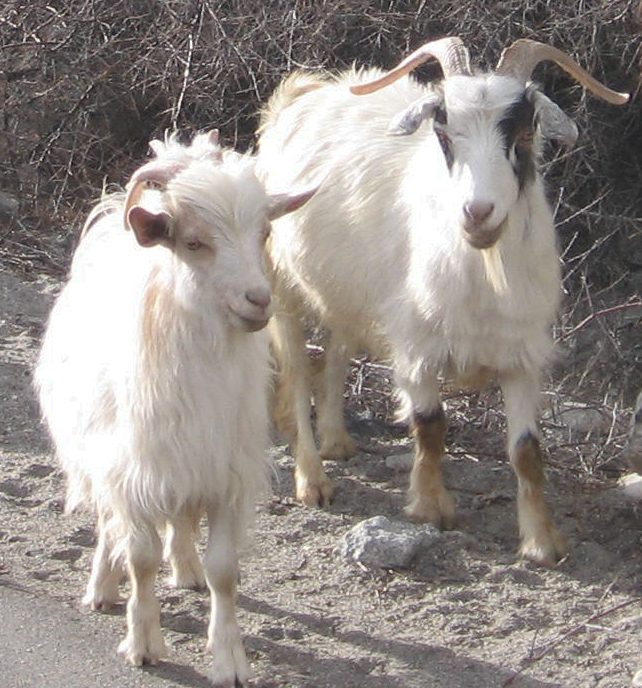
The Truth about Pashmina
(It’s cashmere.)
by Seth Sicroff
Pashmina is simply the indigenous word for cashmere…

Those Google Questions
by Seth Sicroff
January 29, 2021
Why are Pashmina shawls banned?
What is the difference between a scarf and a pashmina?
How do you know if a pashmina is pure?

Independent backpacker tourism: Key to sustainable development in remote mountain destinations
by Seth Sicroff, et al.
Multifunctionality of mountain ecosystems is a goal that is sometimes most compatible with independent backpacker tourism.

Hillary Model, Hillary Medal
by Seth Sicroff
April 20, 2015
The revolutionary model of development assistance that shaped the Sir Edmund Hillary Mountain Legacy Medal.